Saturday, October 8, 2011

Mi Bolivia


We start in La Paz, dizzying in every respect, not only for its high altitude at 3660m, but also for its quirky beauty. It literally takes your breath away.


All travelers enter the city via the flat sparse plains of the sprawling El Alto.


The city’s buildings cling to the sides of the canyon and spill spectacularly downwards. On a clear day, the imposing, showy, snowy Mt. Illamani, 6402m, looms in the background.


The posher suburbs, with skyscrapers, colonial houses and modern glass constructions, occupy the city’s more tranquil lower regions, but most of the daily action takes place further up the incline where a mass of irregular-shaped steep streets and alleys wind their way skywards.


Here, locals embrace their frenetic daily life. Women, sporting long black plaits, bowler hats and vivid mantas, attend to steaming pots or sell everything from dried llama fetuses to designer shoes while men, negotiating the heavy traffic and its fumes, push overladen trolleys.


Sandi tucks into a salteñas, the locals favourite breakfast made with potatoes, meat and spices.


The cloisters, cells, garden and roof views of the Museo San Francisco beautifully revives the history and art of the 460 year-old cathedral, the city’s landmark.


Colonial Calle Jaen has four small museums including the Museo de Metales Preciosos Precolombinos with dazzling gold and silver artifacts and the Peña Marka Tambo, a folk-music venue that presents traditional Andean music.


A must for musicians is the impressive Museo de Instrumentos Musicales with an exhaustive hands-on collection of unique instruments from Bolivia and beyond. Tim tries one he thinks he can handle, made with a stick, a string and a processed meat can.


The charango is a popular stringed instrument in Bolivia, traditionally made with the shell of an armadillo as in the center example above.


Calle Sagarnaga is the street for tasteful and kitsch souvenirs and the nearby Witches Market is the place for oddities such as shriveled llama fetuses, which locals bury under the porches of their new homes for luck and good fortune.


We take a day trip from La Paz to Tiwanaku, high on the altiplano, Bolivia’s most significant archeological site.


Little is known of the people who constructed this great ceremonial center on Lake Titicaca’s southern shore. Archeologists generally agree that the civilization that spawned Tiwanaku rose in about 1600 BC but after AD 1200 the group faded into obscurity. However, evidence of its influence has been found throughout the Inca empire.


There are a number of monoliths, more than 130 tons in weight, strewn around the site. Much has been restored, not always with total authenticity.
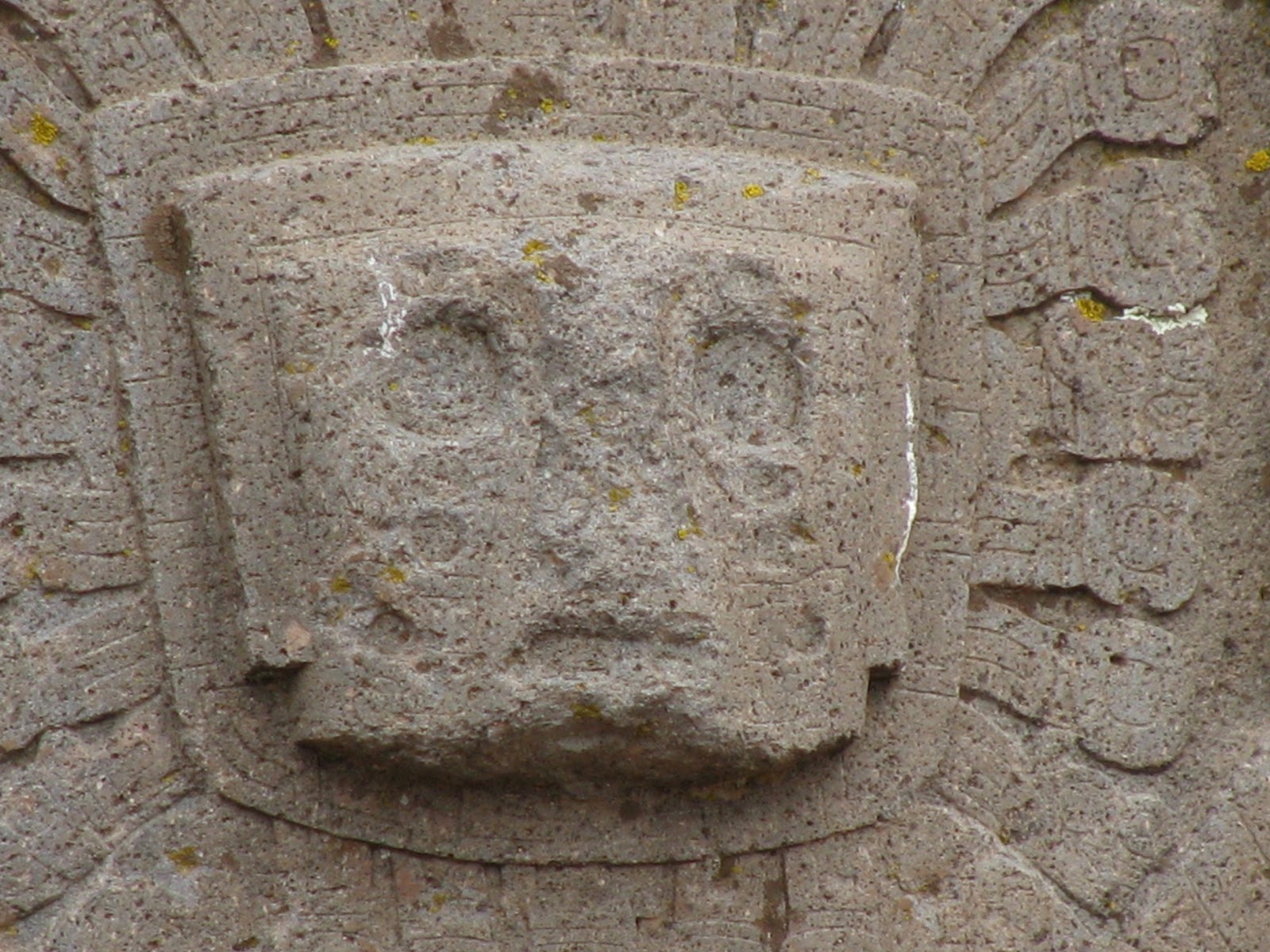

The sun god was the main focus of worship. Here is a close up of the sun gate, the most important structure at Tiwanaku.


Heads of important figures in the society are recreated in the Semi Underground Temple. There’s one you might recognize.

Thursday, September 15, 2011

Finally Summer

Summer took a long time to come this year and once it did we headed on, up and over the mountain to see what we could see.


Squamish Valley Road.


Black Tusk.


Matthew's Traverse near the summit of Whistler Mountain.


The 55 km Slow Food Cycle in Pemberton (north of Whistler) supports local farmers.


Bird's eye view of Cheakamus Lake on High Note Trail, Whistler Mountain.


Tim clocks in 4,181 (6:07 hours) out of 7000 participants cycling 124 km uphill from Vancouver to Whistler in the Gran Fondo Whistler Bike Race. Wheelie awesome summer.

Monday, June 20, 2011

The Castaways


If there's one activity you have to try in coastal British Columbia, sea kayaking is it. Our friends invite us on a trip to Jedediah Island so off to the Kayak Centre on Granville Island we go and a short while later our new family member is a double kayak by Current Designs.


A heron rests in front of The Lighthouse Pub in Sechelt on the Sunshine Coast where we have dinner and spend the first night before setting off.


Just sit right back and you'll hear a tale, a tale of a fateful trip. That started from this chilly port, aboard this tiny ship. It's a one and a half hour boat ride from the Rockwater Resort in Halfmoon Bay to Home Bay on Jedediah Island. Katie waits to load her gear while we pose for a photo.

The mate was a mighty sailing man, the skipper brave and sure. Six passengers set sail that day for a three day tour.


The first mate and the skipper too, will do their very best. To make the others comfortable, in the west coast island nest. Tim quickly gets to work building our camp in Home Bay.


Home sweet home for the next two nights.


No phone, no lights, no motor cars, not a single luxury. Like Robinson Crusoe, as primitive as can be. At our idyllic location on deserted Jedediah Island, a marine (boat access only) provincial park with no running water, roads or amenities, tiny crabs scrabble in the shallows while dozens of live sand dollars waft in low waters. By the thousands, oysters and periwinkles cover the sea bed, surrounded by thick clusters of mussels and barnacles on nearby rocks. At low tide, three racoons hunt for food in the mud while red-beaked oystercatchers fly past, screeching like banshees. Ever-present seagulls drop shellfish onto the beach to break open their food. The abandoned wooden building across the bay in the above photo is the old homestead that once belonged to the Palmers.


Mary and Al Palmer bought the island as a summer holiday destination in 1949, then became full-time residents in 1972. They both farmed the land and cherished the island's 600 acres, which includes cedar, old-growth fir and arbutus trees, peaceful bays and stunning views. The Palmers worked hard to preserve the island, helped by a province-wide fundraising campaign started by the late Dan Culver whose estate donated $1.1 million. Many groups rallied to raise money to create a park, including countless individuals and organizations. The BC government donated millions more and the Palmers agreed to sell the island for $4.2 million, far less than its market value.


A flock of wild sheep still roams the island and several dozen mountain goats, said to be descendants of those left by Spanish explorers, peer down from rocky bluffs. The island has four registered archaeological sites, including a First Nations fishing weir.


So, this is the tale of the castaways, they're here for a good, good time. They'll have to make the best of things, it's an uphill climb. A bird's-eye view of our camp and Carla the Camping Goddess, who teaches us the right way to camp which includes bringing down slippers, a waterproof camera, frozen boxed wine (which keeps both the food and the wine cold), gourmet chocolate (Green & Blacks Organic Cherry is her favourite), a battery-operated mosquito repeller, and an umbrella which doubles as a sail when kayaking downwind. Thanks Carla!


Tim and Dave go about the day's business collecting wood for the campfire.


Time for lunch at a pretty beach we happen upon.


Bright purple starfish hang from rocks just above sea level waiting for the tide to rise.


Diane in fine form as we paddle around the entire island in a few hours.


After a good meal and a few bottles of wine we warm ourselves around the campfire and tell tall tales.


A curious goat with beautiful horns watches as we head off to bed.


Not Sandi's best hair day.


The weather started getting rough, the tiny ship was tossed. If not for the courage of the fearless crew, the Sea Otter would be lost. As we wait for our fishing boat (the Sea Otter) to pick us up we try to suss out how we are going to get five kayaks and mounds of kit across slippery rocks and into it as the tide goes out and the wind howls. Being castaways is all about being resourceful, adaptable and having a long spa treatment booked when you get back to civilization.

So join us here next time dear friends, we hope you had a smile. From six stranded castaways, here on Jedediah Isle.